Lauren de la Parra
Environmental Art & Social Practice
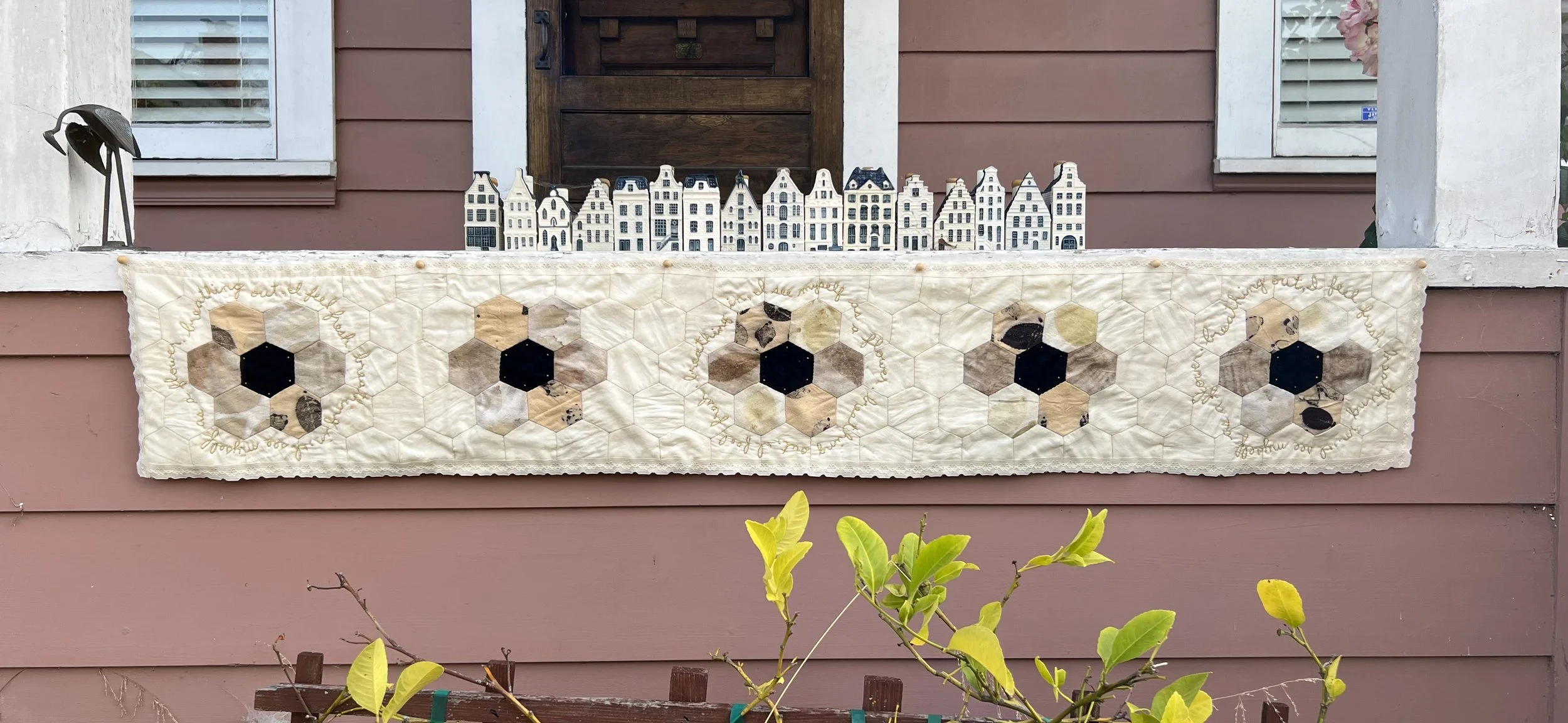
Flower Fresh, 2024.
Upcycled garments (unknown materials), naturally-dyed raw silk, cotton batting, 100% polyester thread. 10 x 58 in.
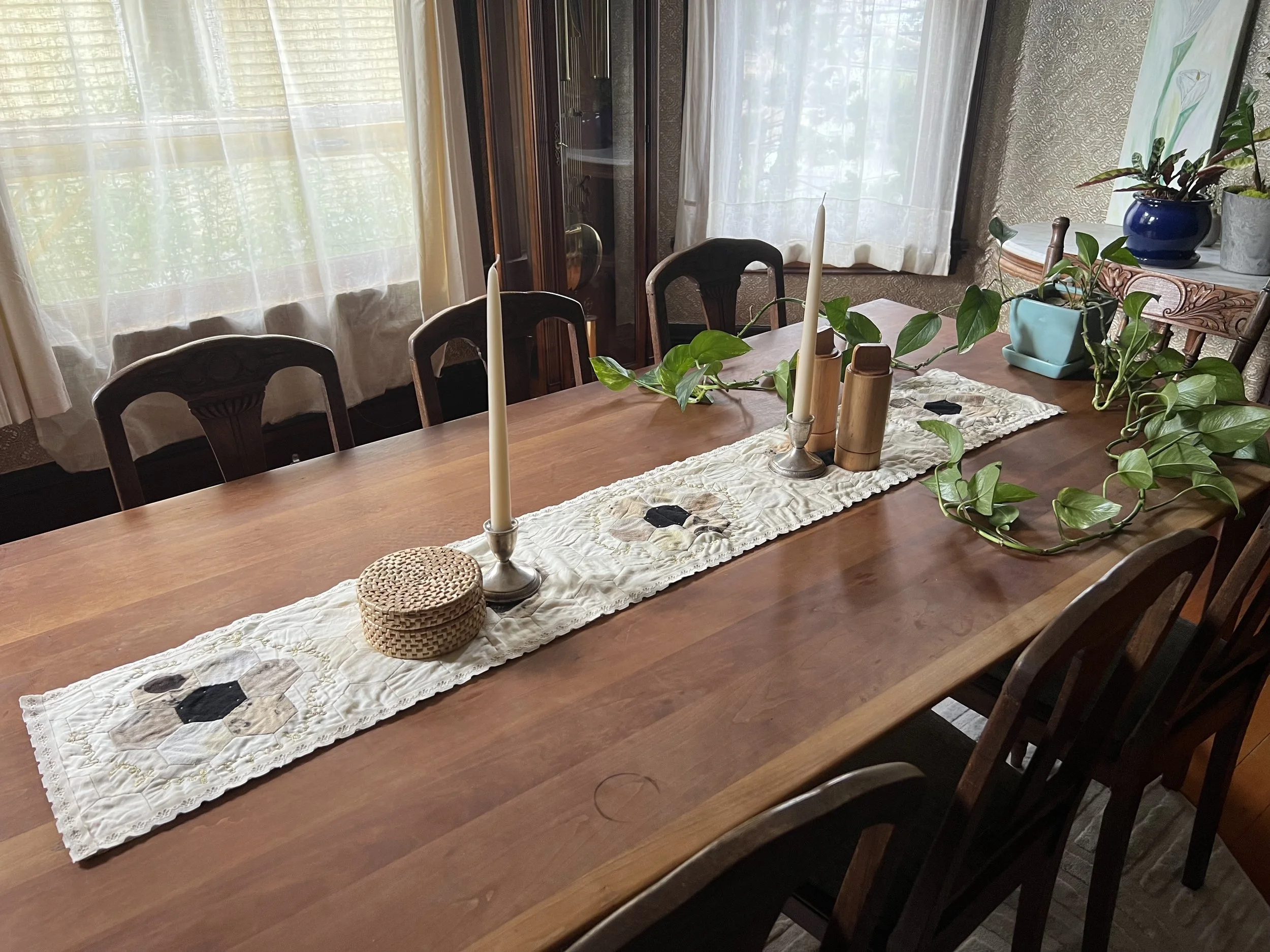
breathing in, I see myself as a flower. breathing out, I feel fresh.
Created over the course of a year, this hand-pieced and embroidered hexagon quilt was developed through a confluence of communal textile practices and floral knowledge gathered across multiple learning contexts. Drawing on a mail-based textile exchange conducted during the COVID-19 pandemic and earlier training in botanical stitching and natural dyeing in eastern Tennessee, the work assembles contributions, techniques, and materials from many hands and geographies.
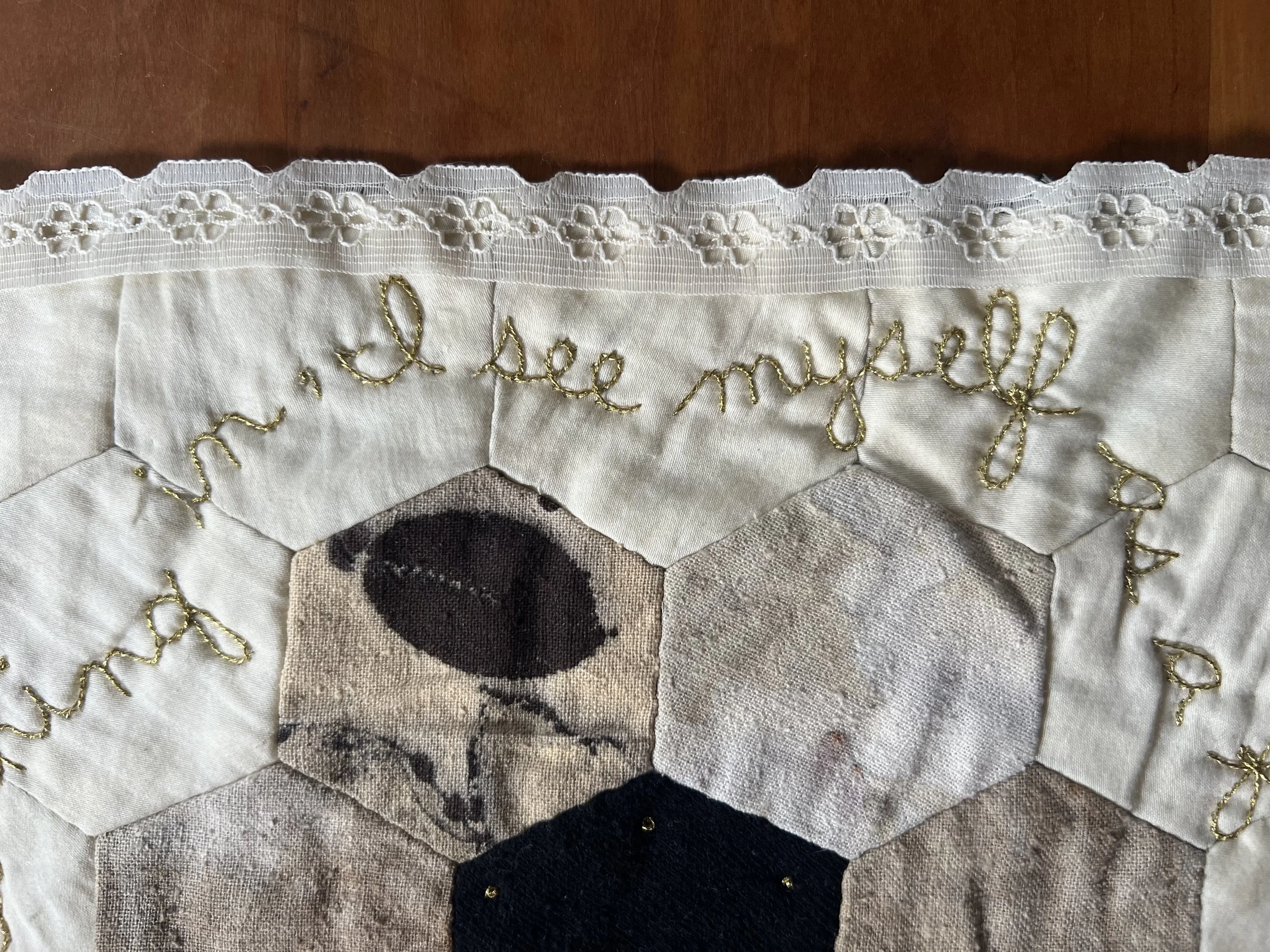
The quilt’s composite, iterative construction reflects an ethic of interdependence: it was built slowly, collaboratively, and through attention to both human and more-than-human sources. Designed to function flexibly—as a welcoming threshold banner, an invitational centerpiece for shared meals, or a shawl for metta (loving-kindness) meditation—the piece privileges use, touch, and relational presence over fixed modes of display.
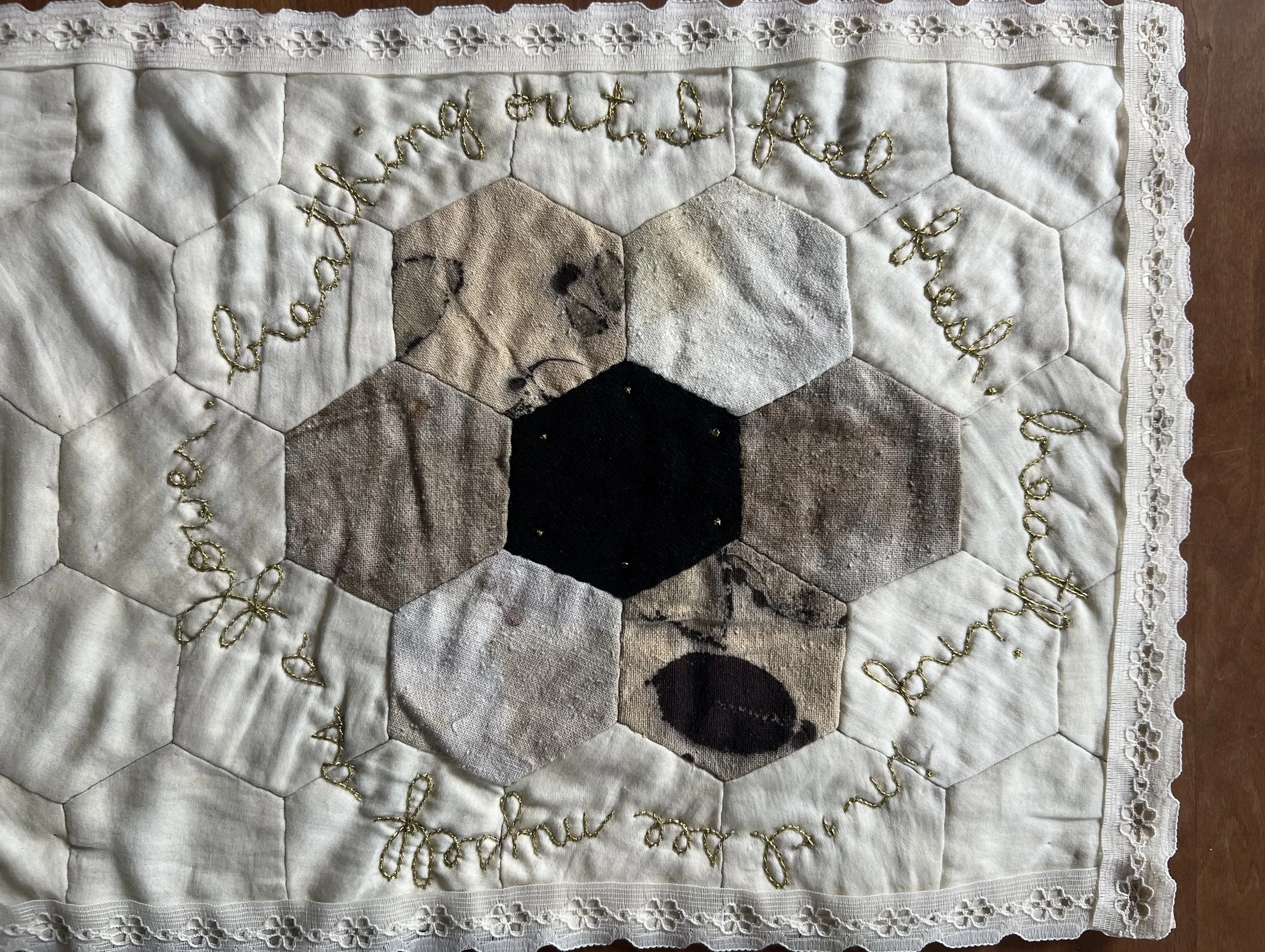
Inspired by Thich Nhat Hanh’s teachings on mindfulness and interbeing, the work considers how personal relationships with plants are shaped through practices of attentiveness, care, and collective labor. By foregrounding plants not as decorative motifs but as material collaborators, the quilt asks how practices of making together can mediate experiences of belonging, ecological awareness, and responsibility.
Climate Coven, 2019-2020.
Collaborative social practice project
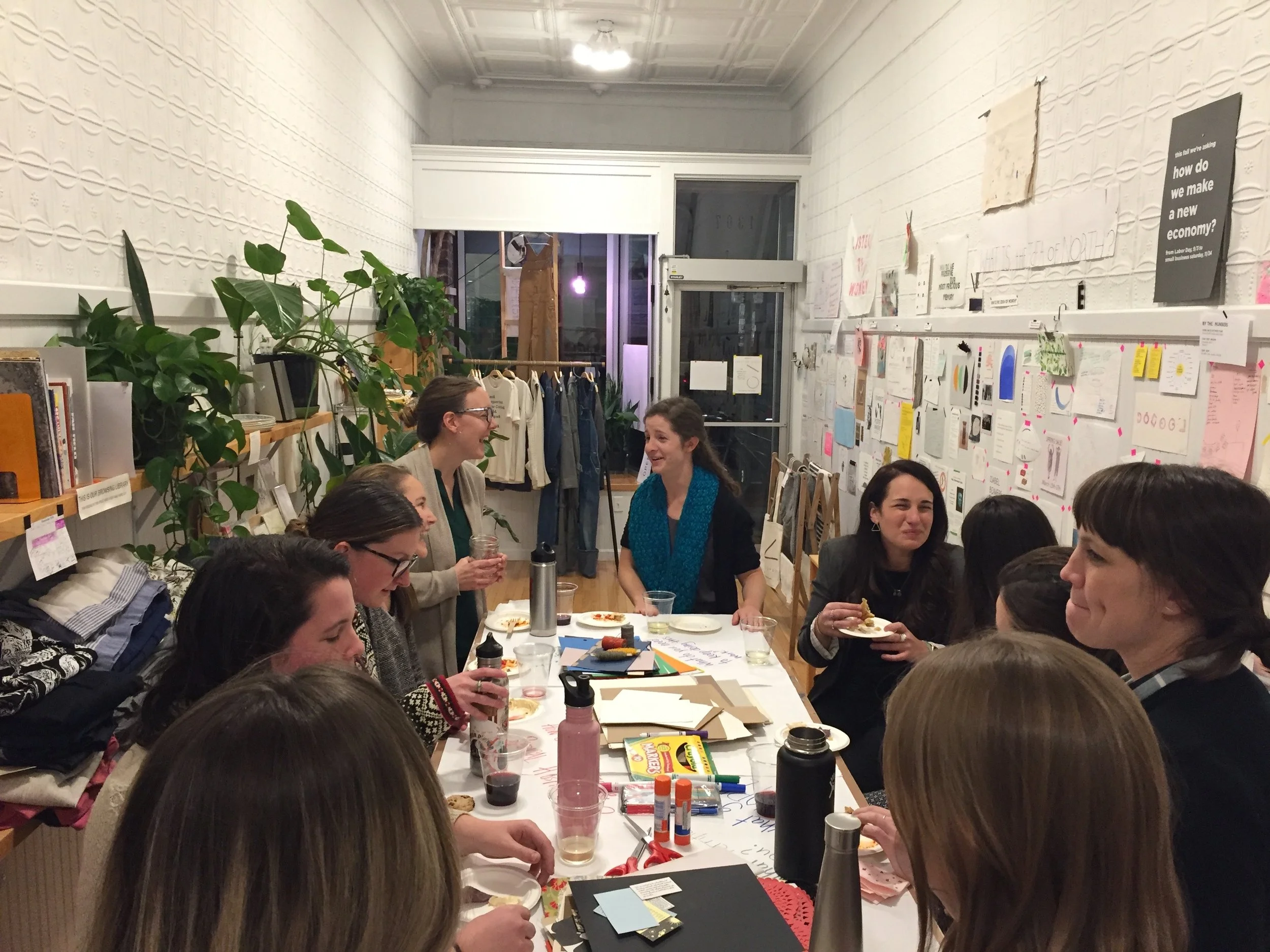
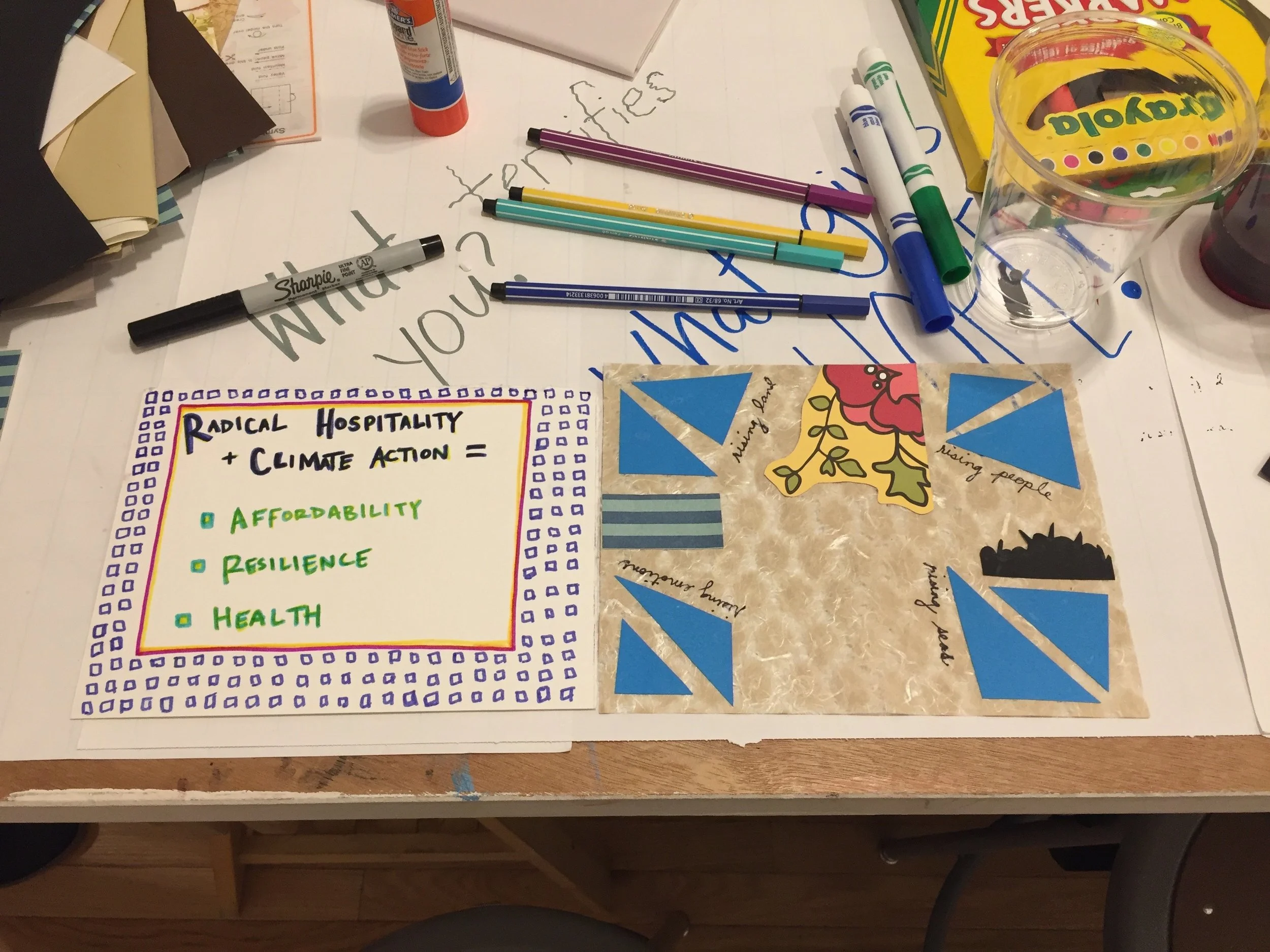
Climate Coven was developed in collaboration with Practice Space, a local studio, storefront, and research-based social practice project led by artists Diana Lempel and Nicole Lattuca, and co-facilitated with my colleague and friend Hannah Payne, Director of Carbon Neutrality for the City of Boston. Together, we designed a series of gatherings for women and nonbinary people working in climate and sustainability fields, using reflection, dialogue, and collective art-making as tools for processing professional burnout, climate grief, and ethical responsibility.
Rather than positioning art as an illustrative outcome, the project treated creative practice as a shared framework for sense-making and care. Through facilitated conversations, hands-on making, and guided reflection, participants were invited to consider how their labor is shaped by institutional constraints, emotional toll, and personal values. My role focused on project design, facilitation, and holding relational space, with particular attention to consent, accessibility, and reciprocity. The project emphasizes art as a social infrastructure—one that can support resilience, solidarity, and imaginative possibility within climate work.
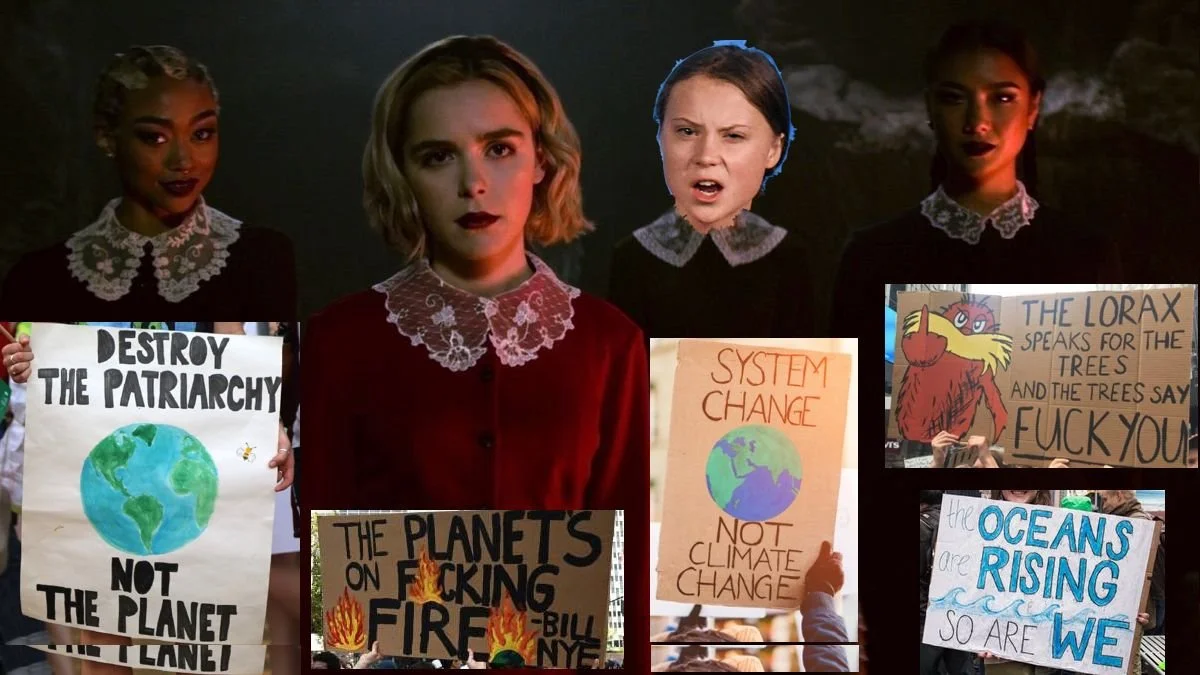
Images (from the left): Climate Coven event at Practice Space, December 2019; artistic responses to the prompt, “How can we practice radical hospitality?”; Climate Coven, 2019, collaborative digital collage.
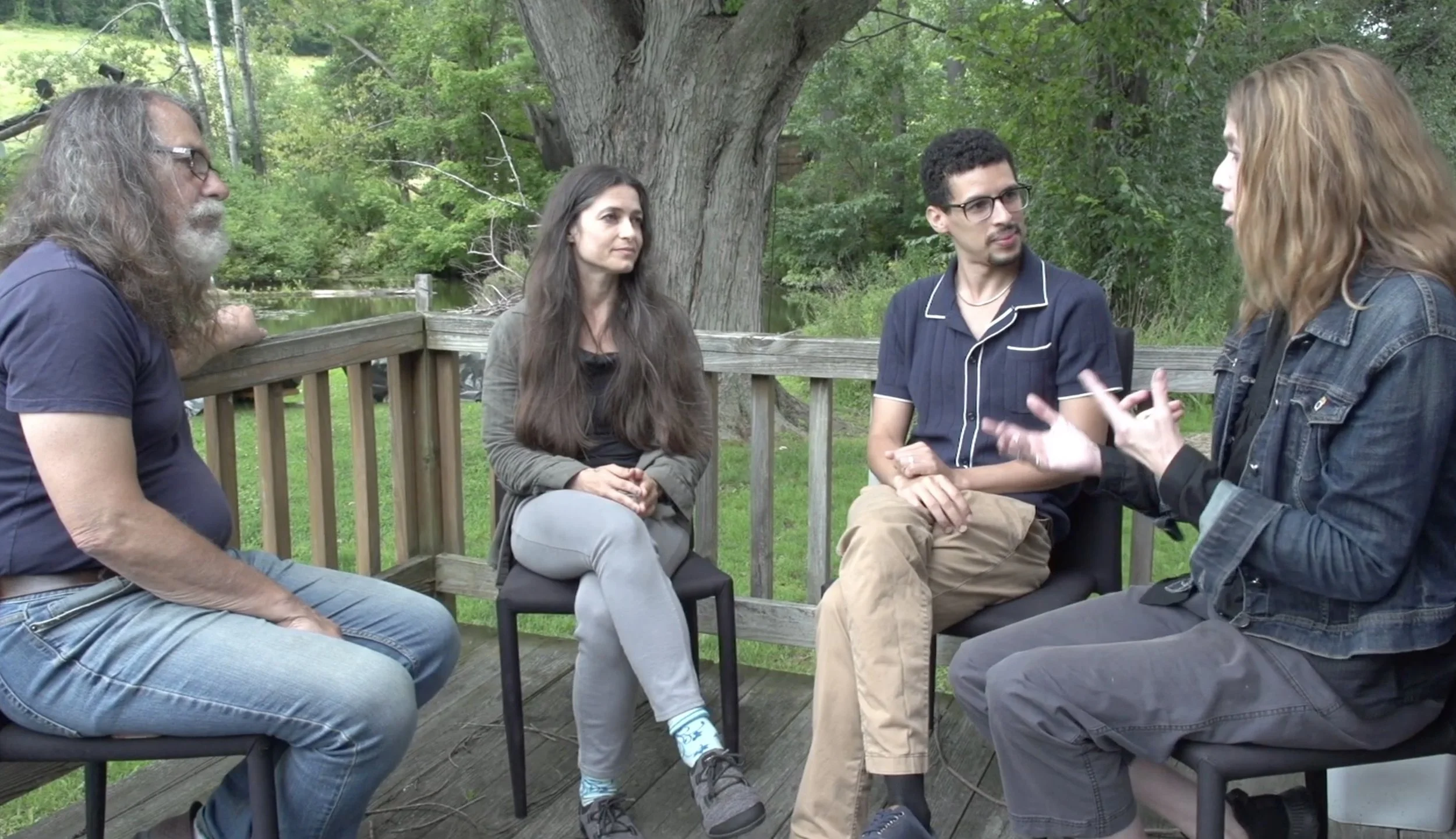
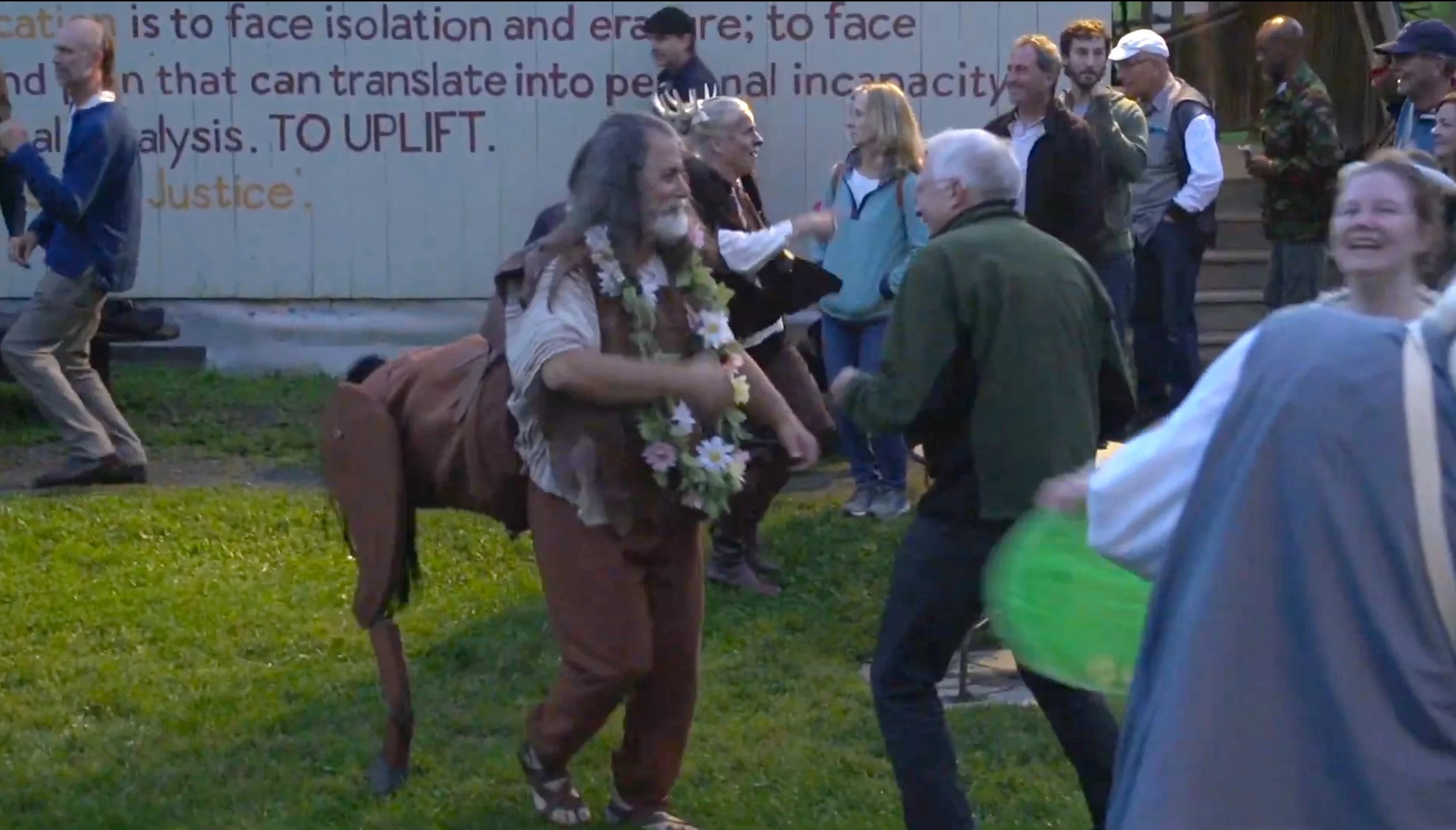
Art Justice // All Justice: Double Edge Theatre, 2024-25.
Collaborative research and documentary project
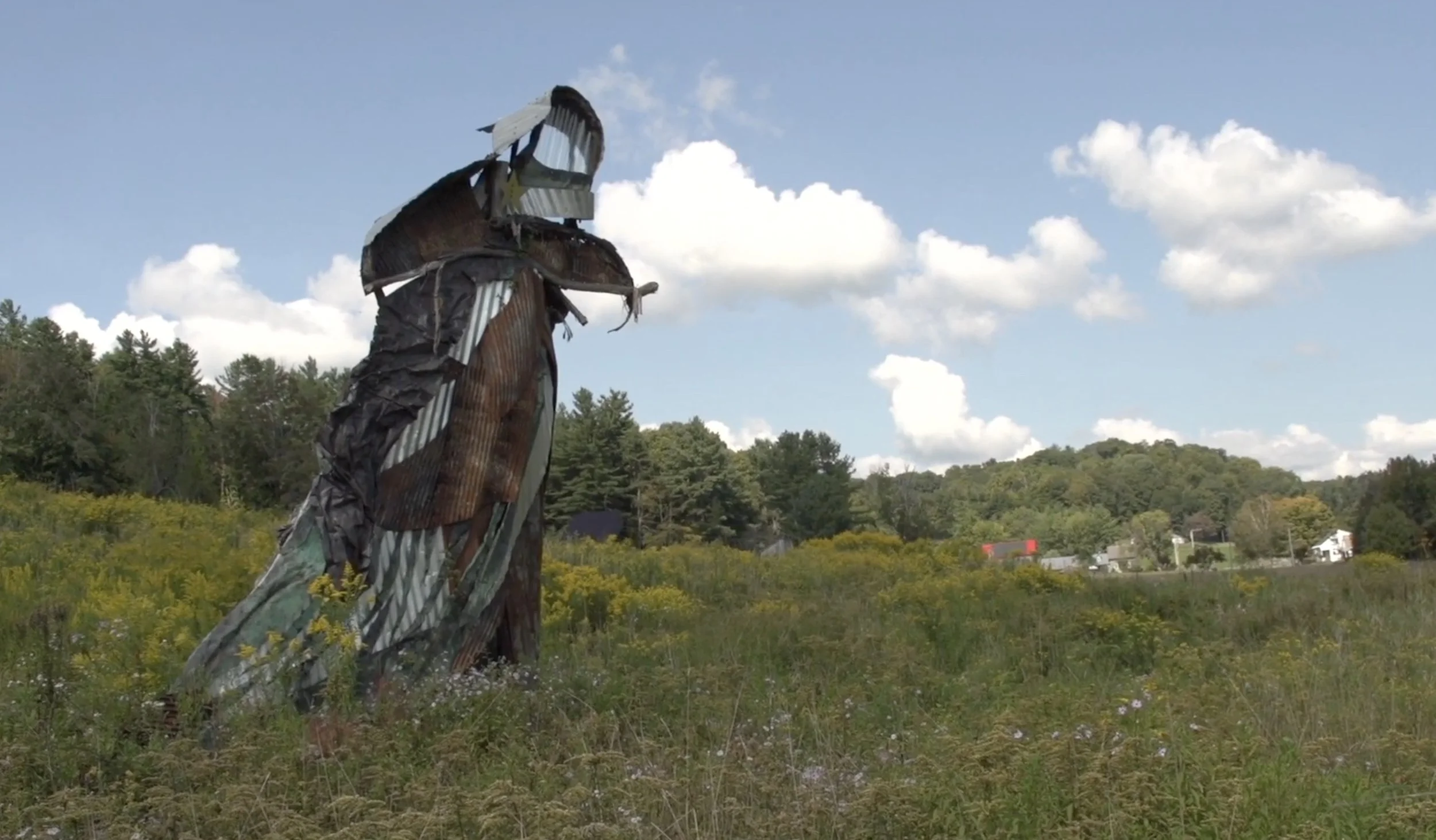
Art Justice // All Justice: Double Edge Theatre is a research and documentary project developed in partnership with Double Edge Theatre and the Artists Literacies Institute, using documentary film as both medium and process for collaborative understanding. Funded by a mini-grant from UK-based creative climate action nonprofit Julie’s Bicycle (JB) and grounded in Double Edge Theatre’s long-term relationship to land and ensemble-based practice, the project examined how cultural production, ecological stewardship, and intersectional climate justice are embedded in the organization’s daily ways of working. The film and accompanying written piece are forthcoming in 2026 through JB’s online Creative Climate Justice Hub platform.
The documentary process unfolded through extended observation, conversation, and collaborative interpretation, prioritizing listening over narration and process over product. Film functioned as a reflective tool through which participants articulated tacit knowledge, embodied practices, and values that are often difficult to translate into institutional language. My role involved co-designing the research framework, producing and coordinating the filming process, facilitating reflective conversations, and shaping the documentary as a non-extractive inquiry. This project contributed to my broader interest in documentation as a form of environmental art and social practice—one that can surface situated knowledge, honor relational histories, and support cultural continuity over time.
Images (clockwise from the left, all documentary stills): Landscape at the Double Edge Farm Center; Ensemble members reflect together; Scene from Double Edge’s 2024 Summer Spectacle, The Heron’s Flight.
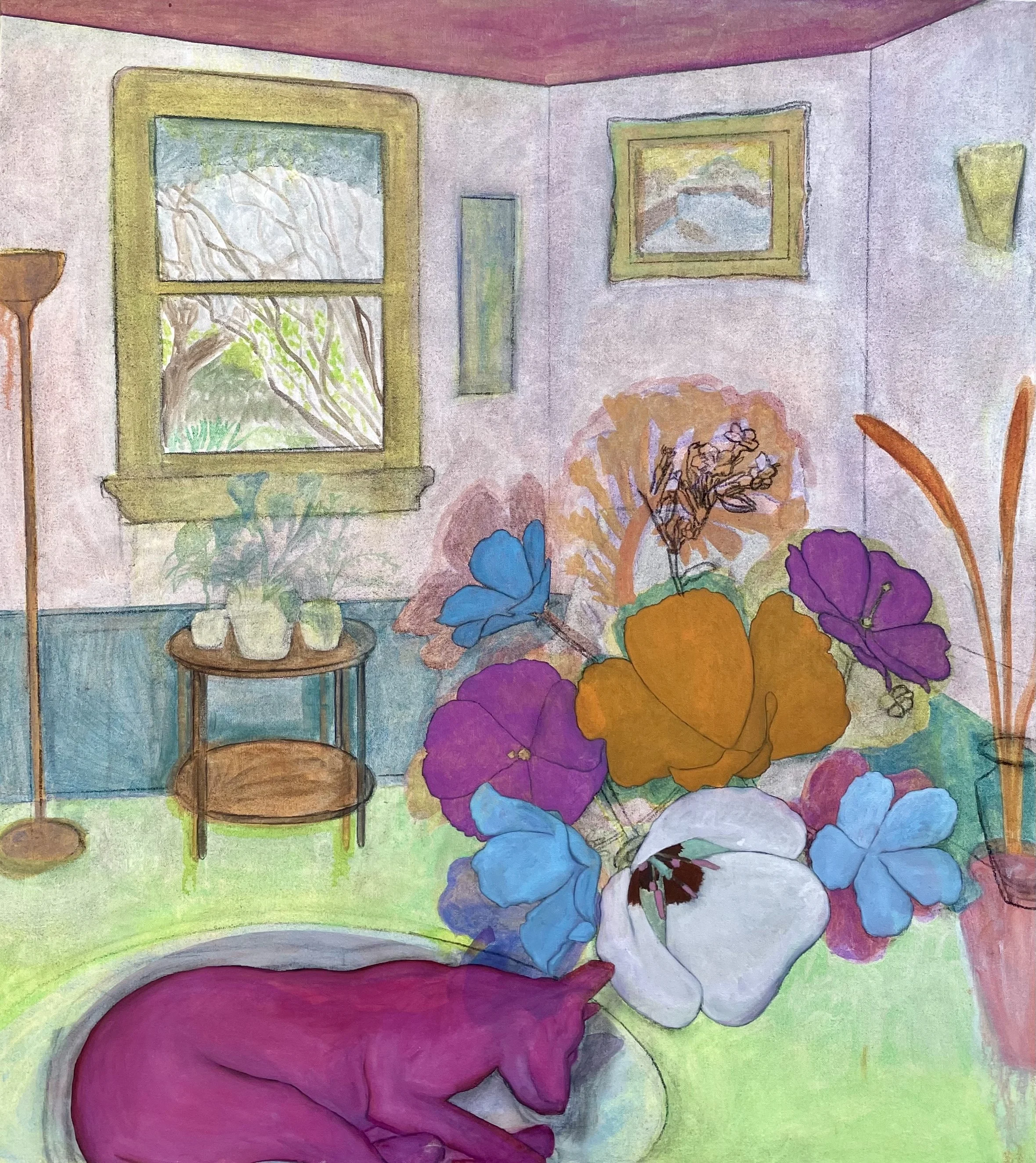
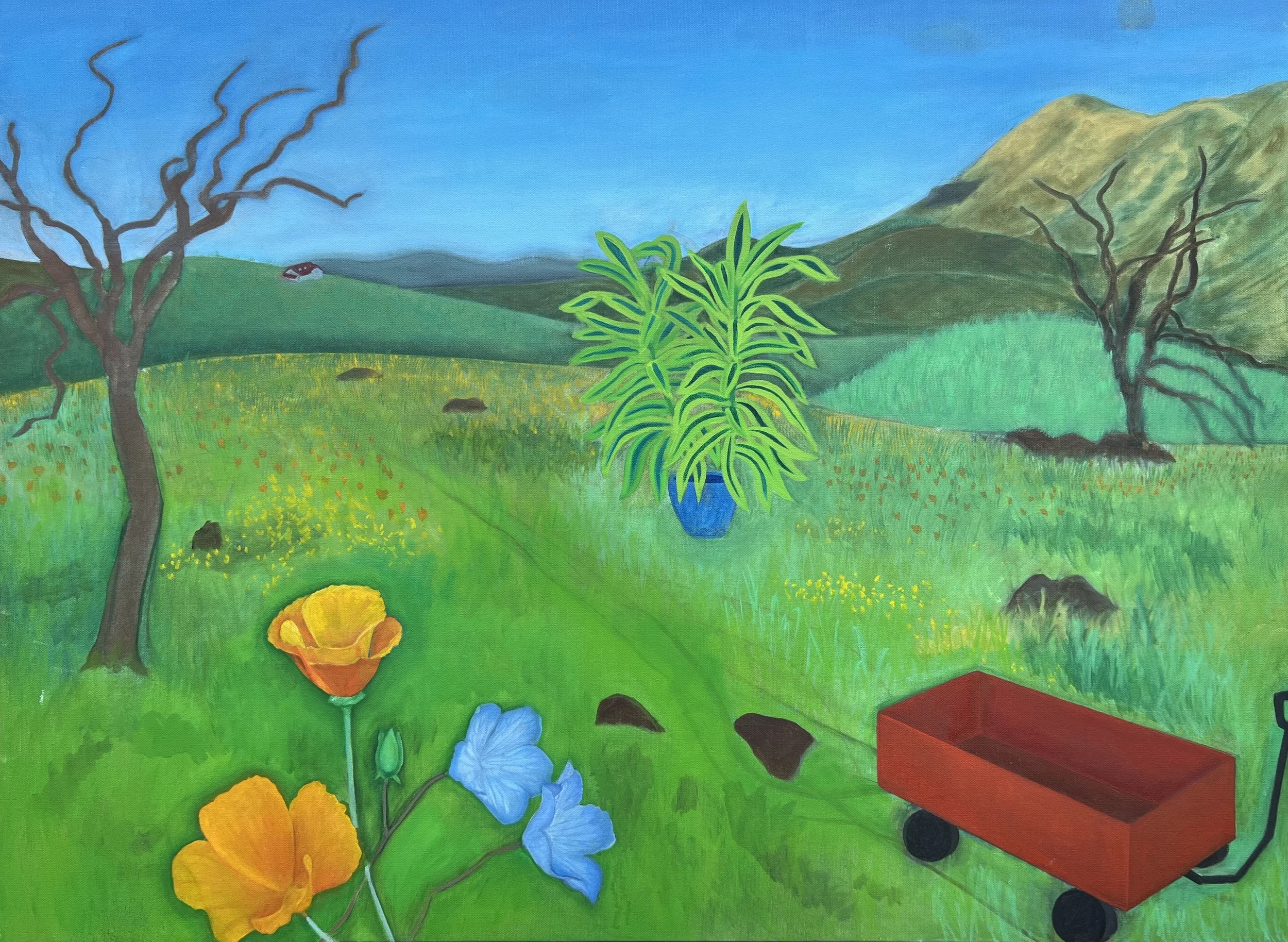
what if we were wildflowers
Painting series, work in progress
This ongoing painting series explores everyday domestic scenes and rural landscapes as sites where land, leisure, labor, and belonging quietly intersect. Plants appear not as background elements but as protagonists—occupying space, expressing agency, and engaging in rituals of reflection, care, maintenance, and rest. By focusing on familiar, often overlooked scenes, the work considers how vegetal labor underpins human comfort and productivity while remaining largely unseen.
Working in series allows me to test how shifts in scale, composition, and setting alter the perceived agency of plant forms and the social meanings attached to them. Painting functions here as a method of slow observation and material inquiry, offering a counterpoint to my participatory work by foregrounding attention, duration, and looking as forms of ecological practice. These works remain in progress as I continue to explore how painterly strategies might articulate relationships between land use, domestic labor, and care without relying on extractive or romanticized landscape conventions.
(above) Garden Variety (working title). In progress. Oil on canvas, 40 x 36 in.
(top left) At Home with the Wildflowers (working title). In progress. Oil on canvas, 30 x 40 in.
Paperbark Literary Magazine & Hearts in Action, 2016-18
Editorial leadership and social practice platform
Paperbark is an interdisciplinary journal of art, ecology, and climate justice that I co-founded and led as Editor-in-Chief during my MS degree program. While the publication itself is not an art object, I approached Paperbark as a form of cultural infrastructure—one designed to support reflective, creative, and justice-oriented climate discourse outside of purely academic or policy frameworks.
As part of this work, I co-facilitated Hearts in Action, a public event series developed through Paperbark that brought together artists, students, and community members for guided reflection, creative exercises, and dialogue around climate grief, ethical responsibility, and collective care. The series included collaborations with invited guest artists such as Phyllis Labanowski, and was developed in partnership with an on-campus climate initiative focused on processing climate grief called Talking Truth. Hearts in Action treated facilitation, emotional labor, and shared meaning-making as artistic acts in themselves, which reinforced my interest in leadership as a relational, creative practice and in art as a container for sustained reflection, connection, and ecological accountability.
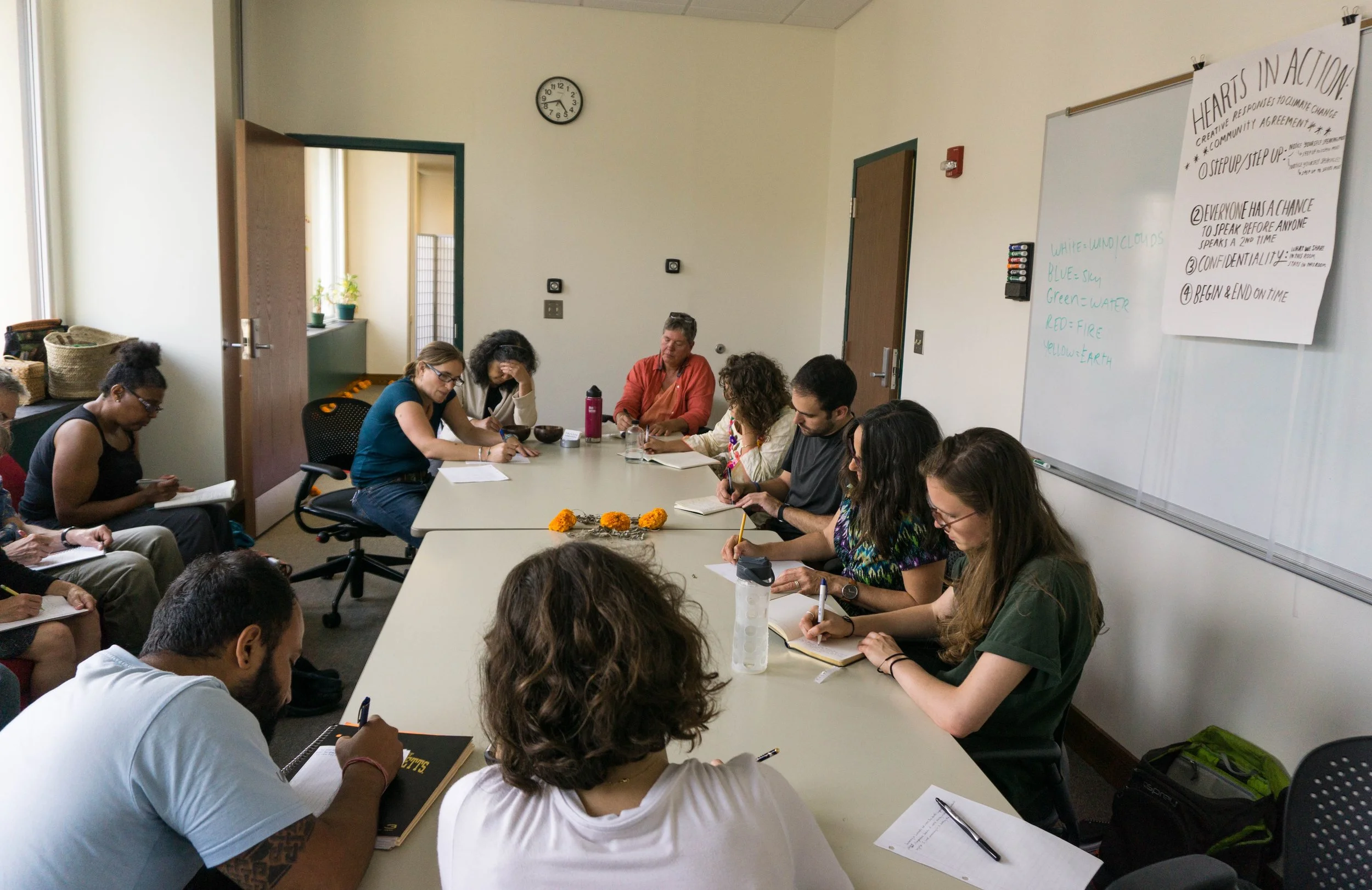
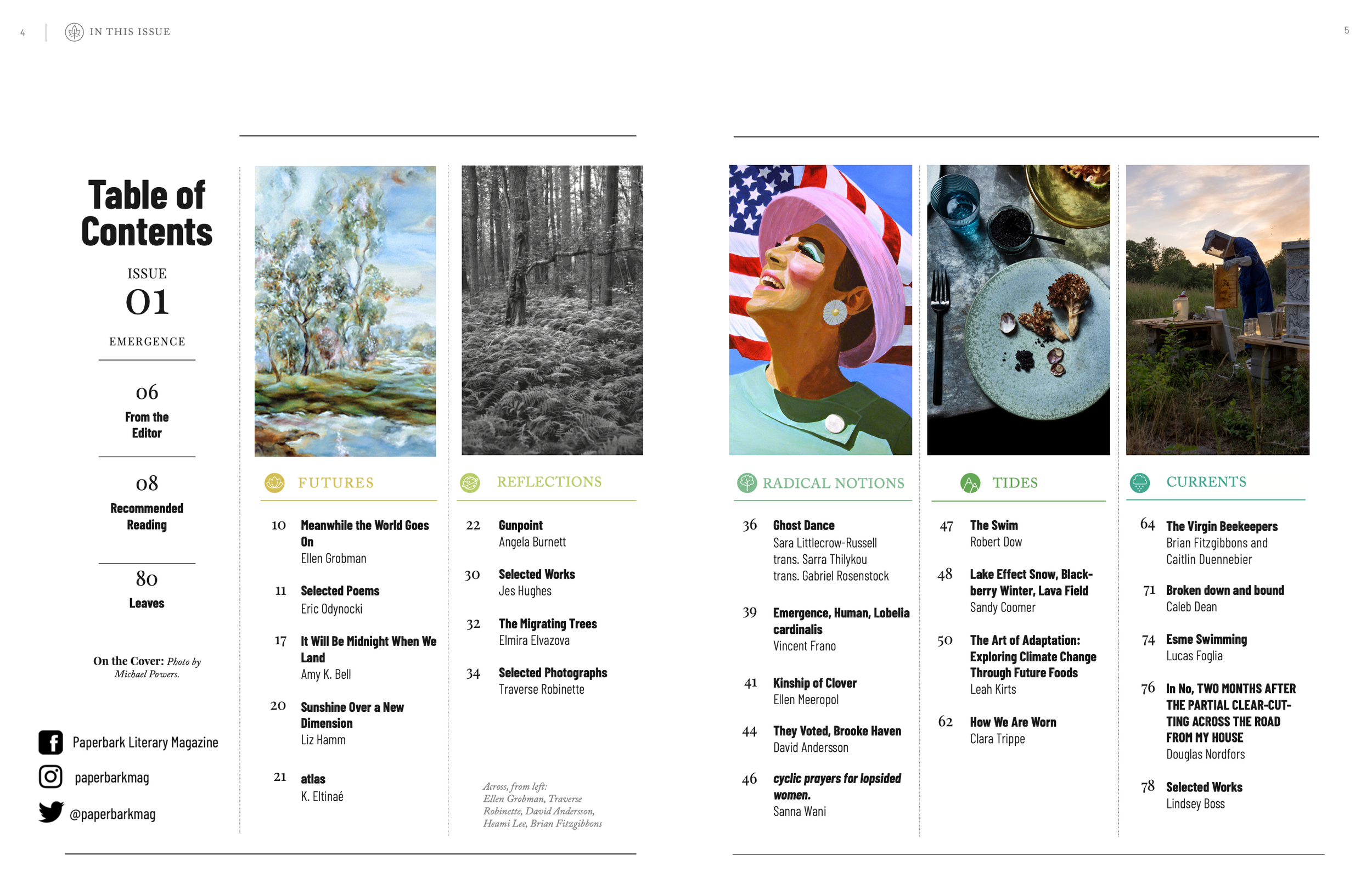
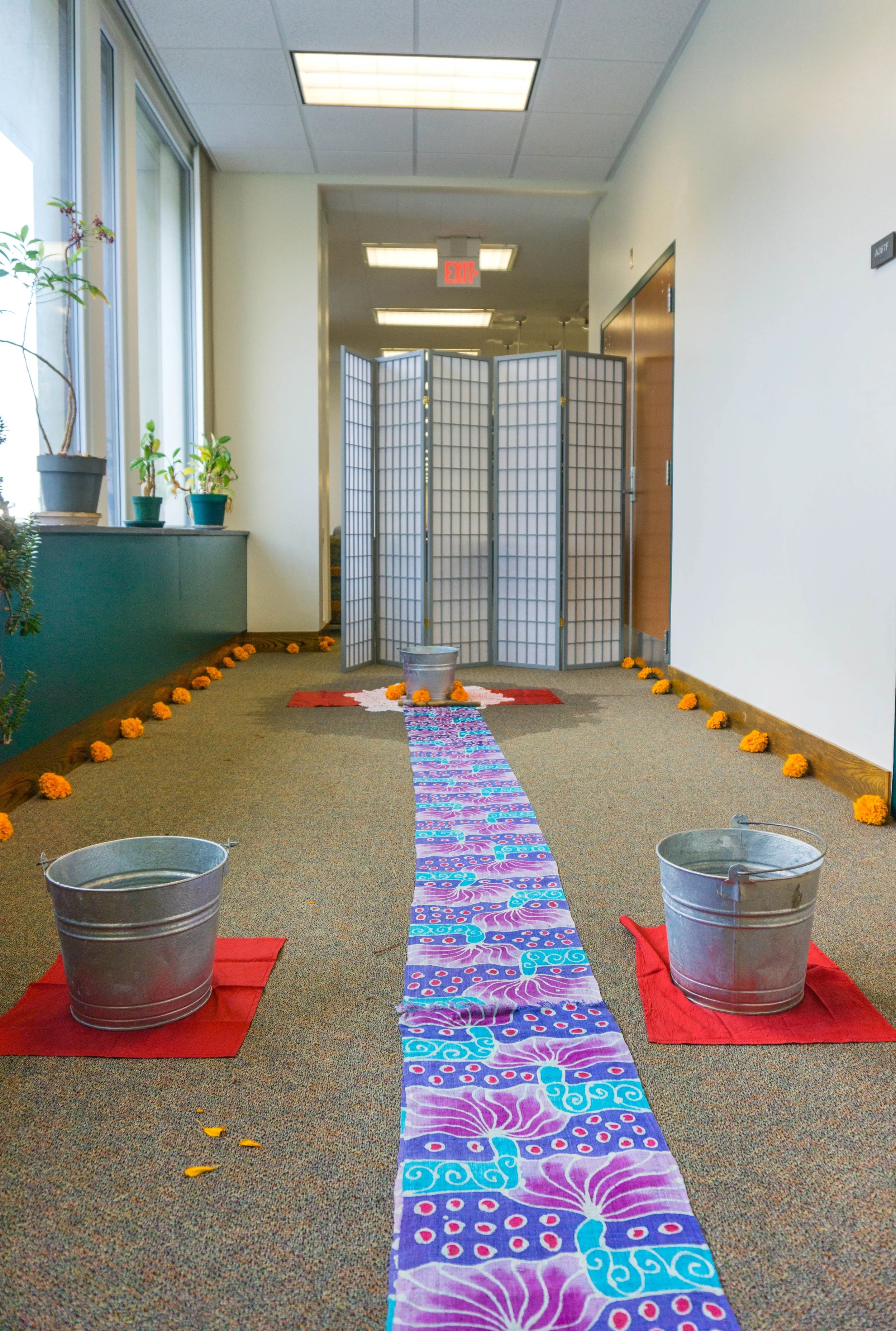
Images (clockwise from top left): Hearts in Action gathering, 2017; installation by artist Phyllis Labanowski as part of a water appreciation ritual and reflection with Hearts in Action participants that also included learning about our local waterways and drinking water system; Paperbark Issue 1: Emergence table of contents. Paperbark has now published five print issues which are available to view digitally via open access here.
Proposed project: Coats of Yarn
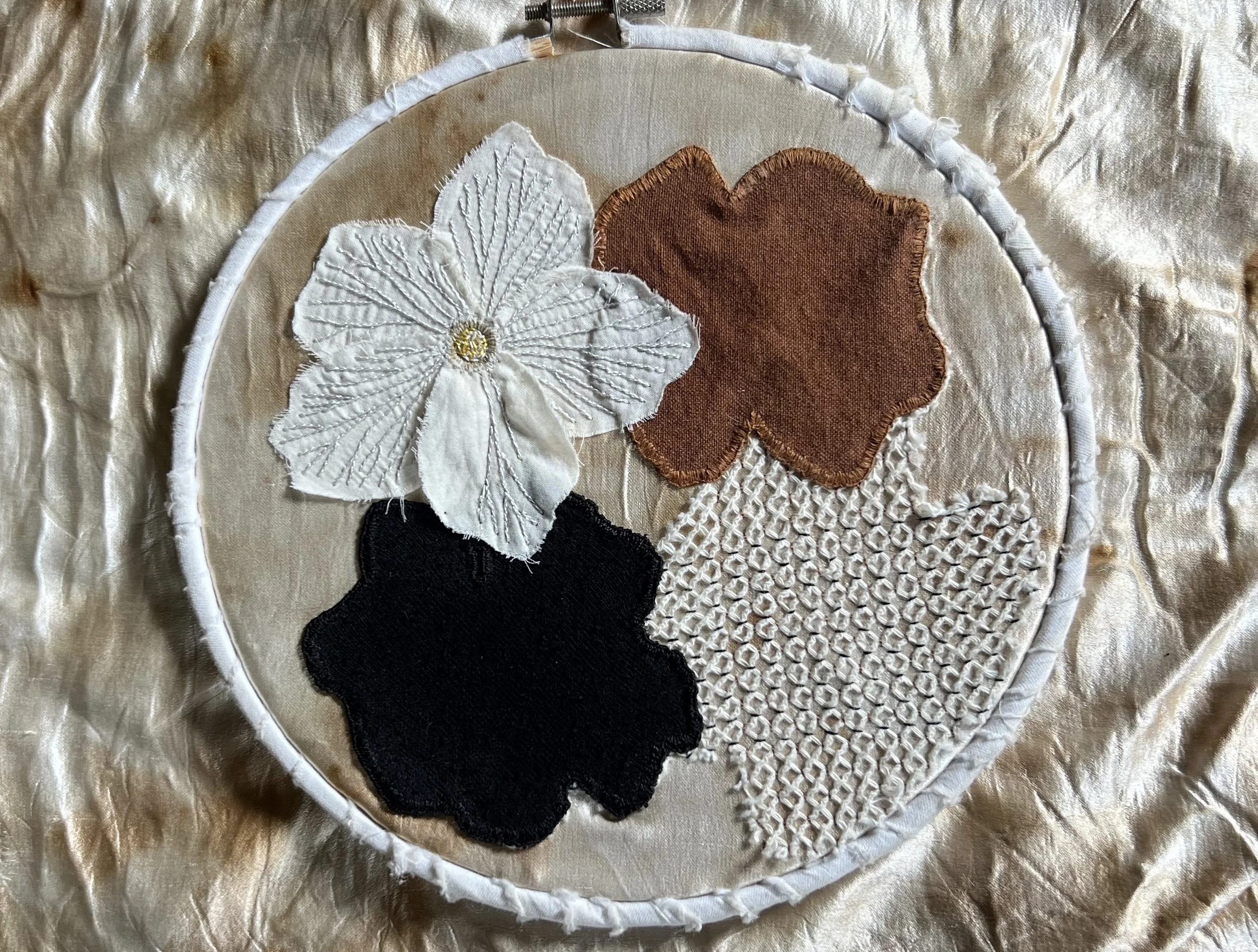
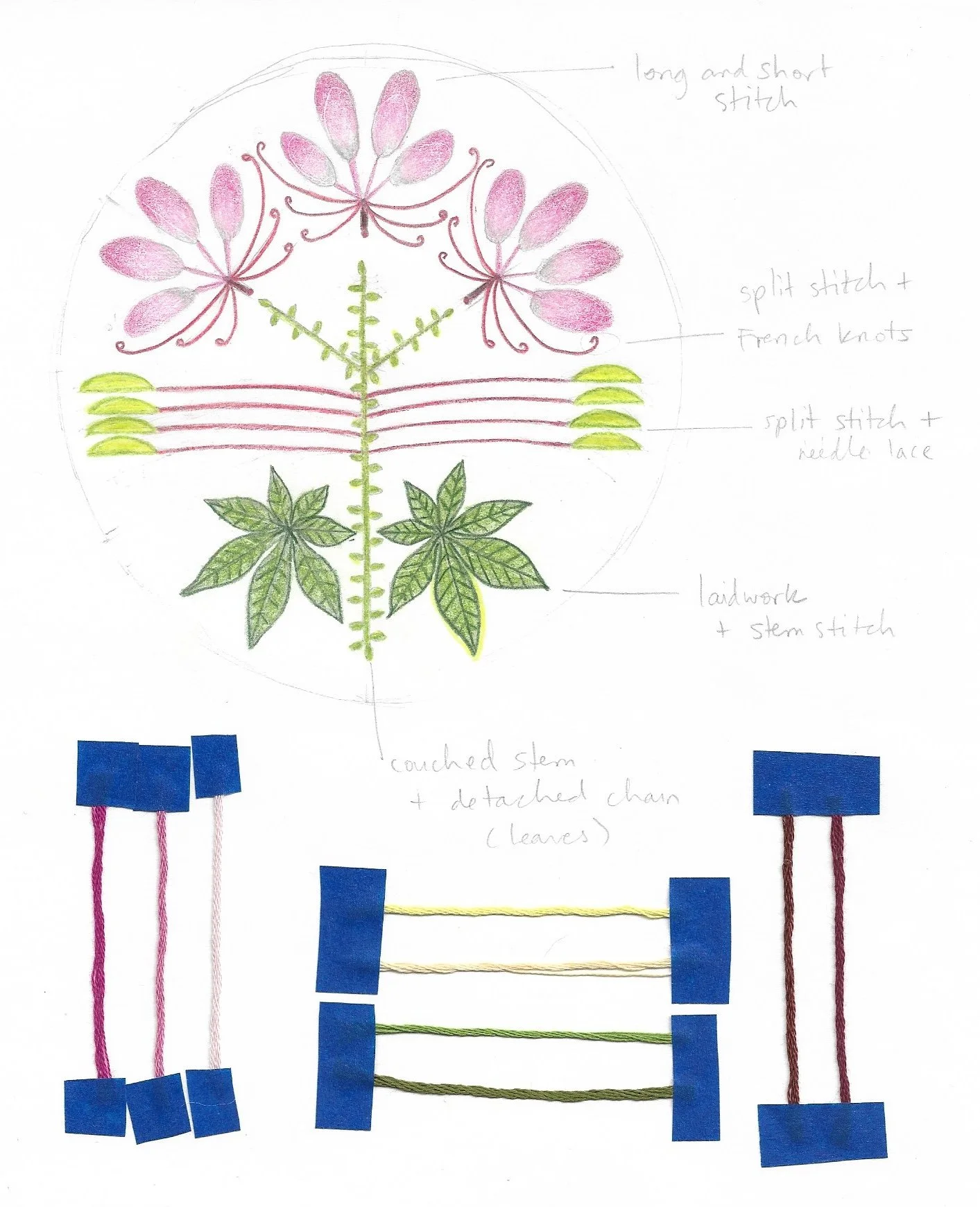
Coats of Yarn is a proposed participatory, place-based project that develops through experiments with textiles and botanical materials as tools for collective reflection, care, and ecological attention. Currently in development through sketches, material tests, and small-scale samples, the project builds on my ongoing engagement with plant-based materials, communal making, and facilitated gathering, while opening new questions about scale, kinship, and identity as they take shape through relationship to specific plants and places.
At its core, the project asks how shared textile processes might function as sites of ecological learning and social connection—particularly when plants are approached as carriers of cultural knowledge and collaborators in meaning-making rather than resources. What remains unresolved are questions of site, duration, and participation: how the work adapts to different bioregional contexts, how responsibility is shared among participants, and how the project is sustained over time. At present, I do not yet know how to hold space for uncertainty and authorship within this project without defaulting to facilitation models I already trust. I see graduate study as a critical environment for deepening this inquiry through mentorship, critique, and collaborative experimentation.
Images (clockwise from the top left):
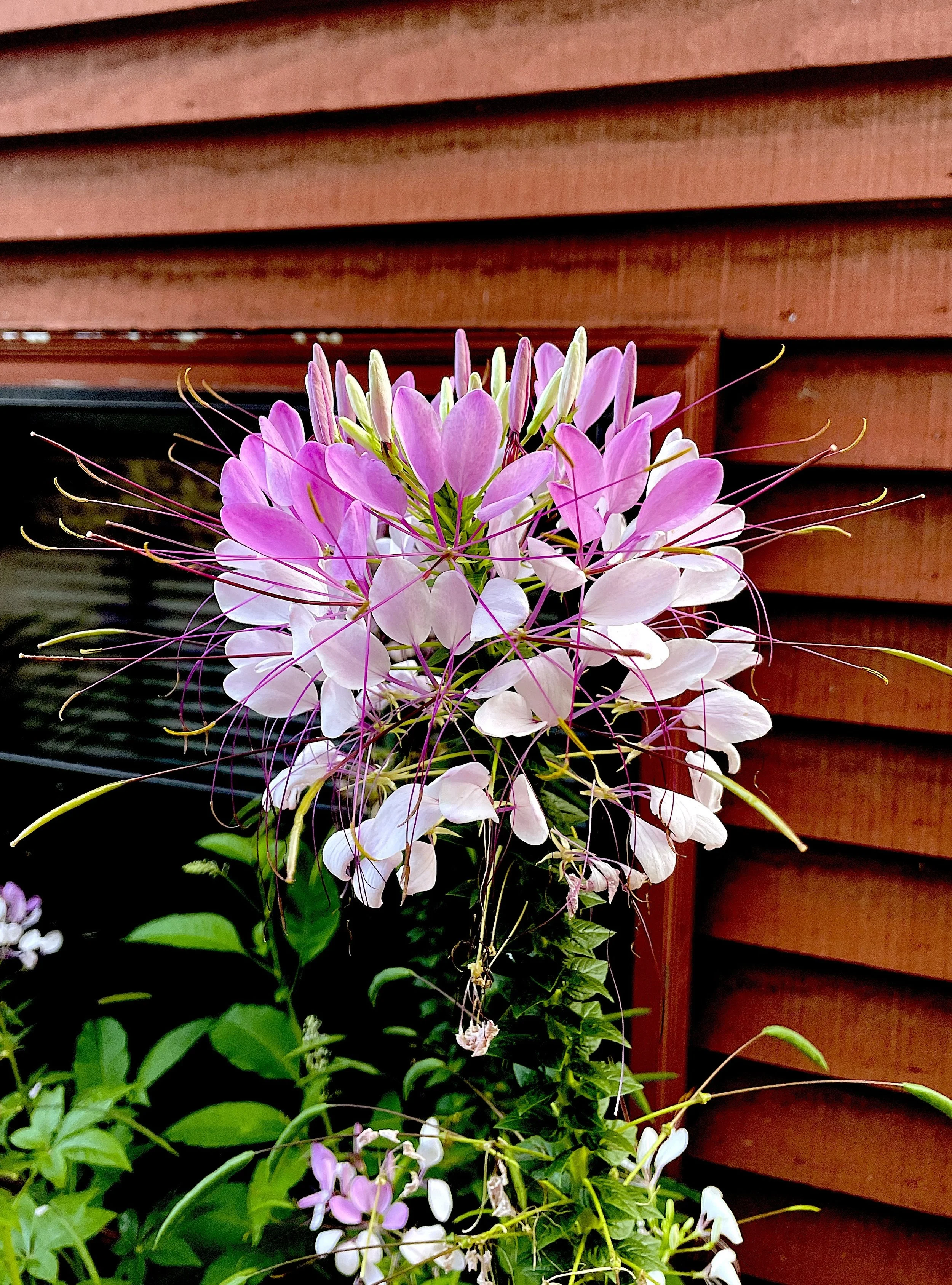
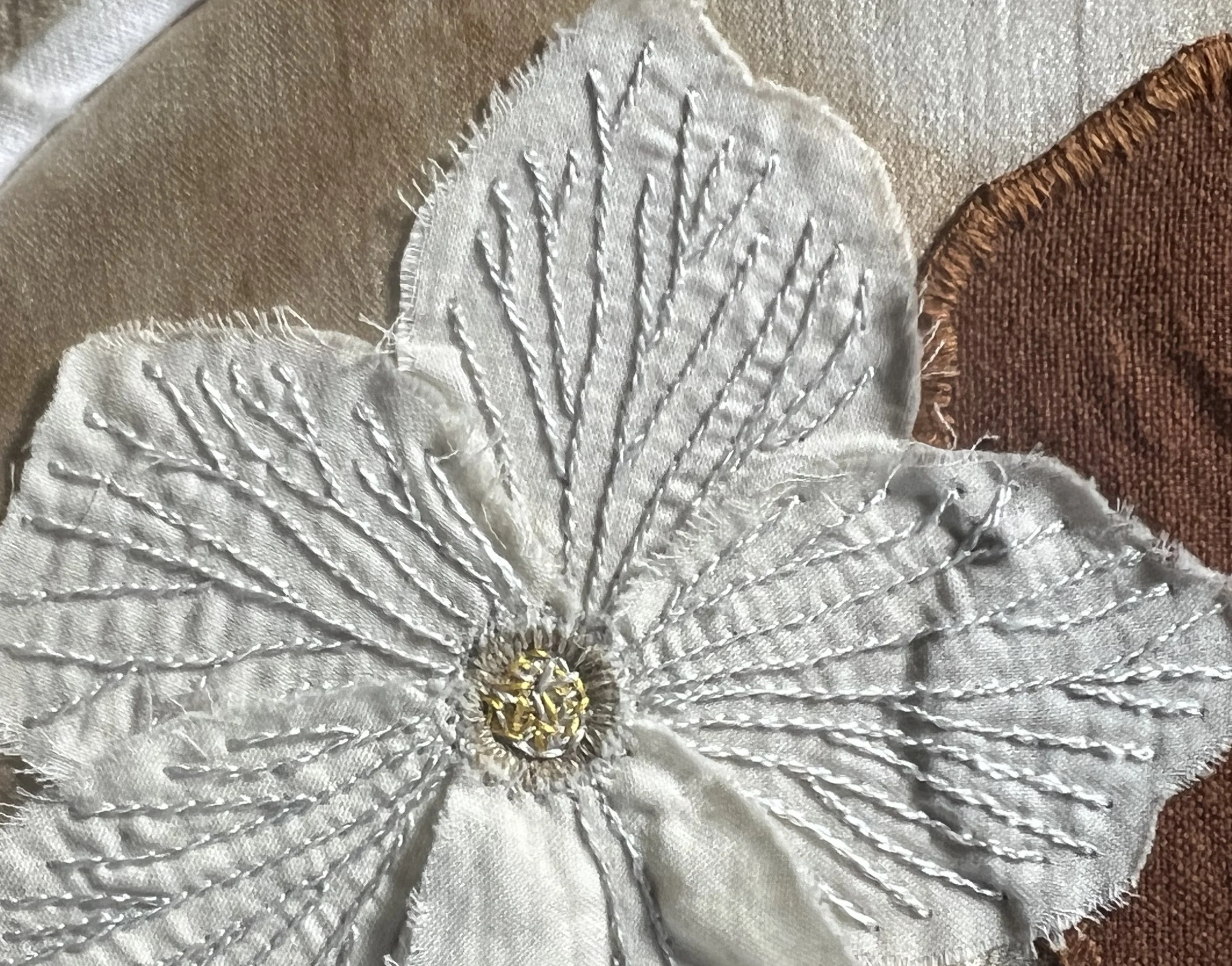
Tarenaya hassleriana (spider flower); Concept design for a botanical “coat of yarn” centering a spider flower; Sample based on a wild rose, stitched on upcycled and naturally-dyed garment scraps; Stitching detail.